Aerosol Dynamics • Fluid Chemistry

Atmospheric Hazers & Low-Fog Systems

Lighting beams are invisible without particulates. Explore fluid suspension thermodynamics, optical refraction, aerosol longevity, and proper HVAC coordination in arena venues.

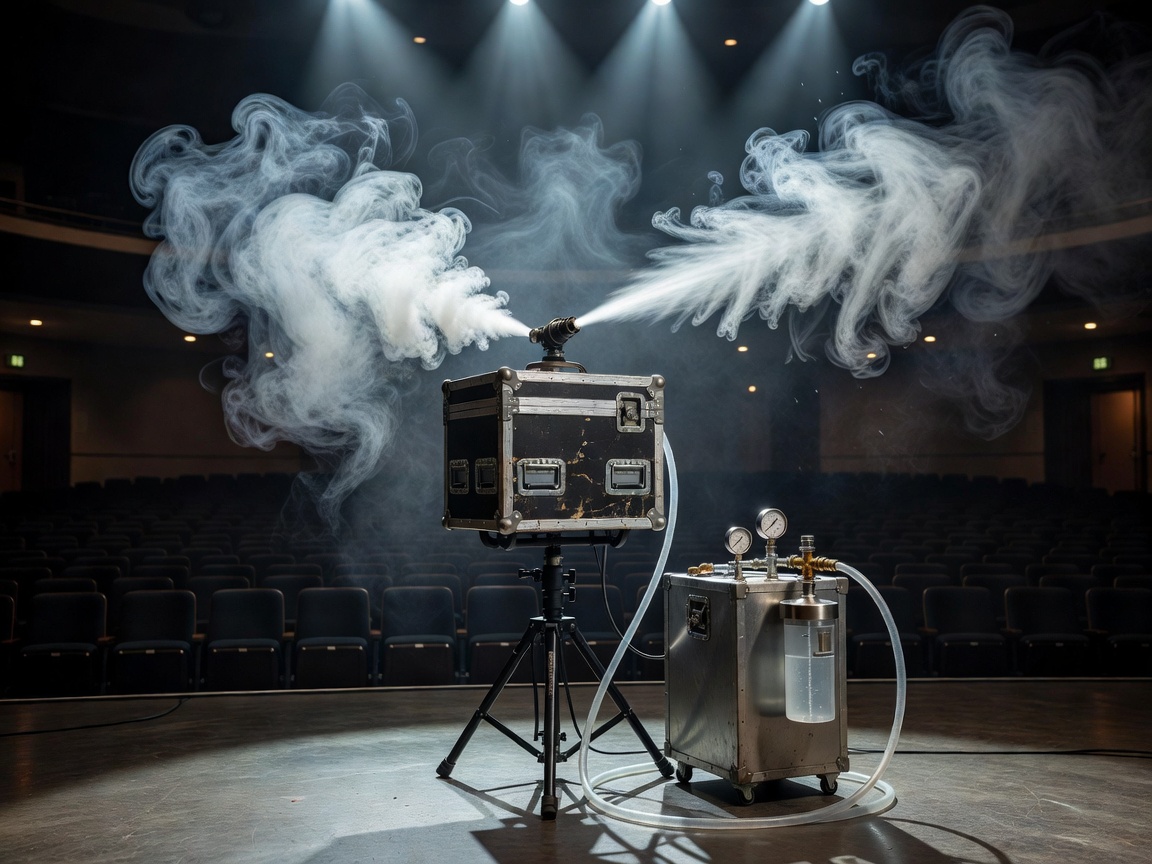
Industrial road-case mounted arena hazer discharging ultra-fine haze into auditorium air

Water vs. Mineral-Oil Aerosols

Water-glycol formulations generate medium-life particulate (15-30 minutes hang time) with zero greasy film residue on sensitive optical lenses and mirror coatings. Mineral-oil hazers produce smaller 0.2 micron droplets that remain in suspension for hours, but require scheduled isopropyl alcohol optic wash-downs after long tours.
Fluid Viscosity Refraction Index: 1.43 Zero Odor Formula
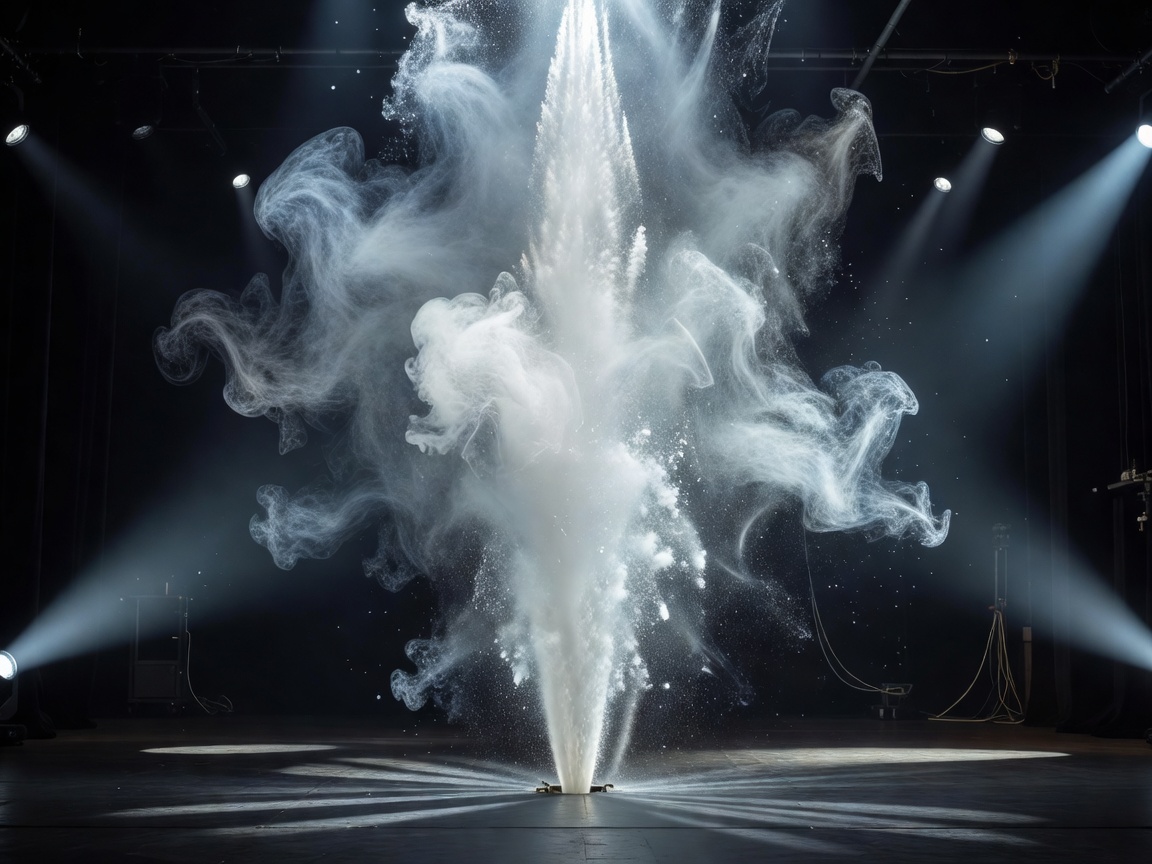
High-velocity cryogenic liquid CO2 jet blast firing vertically from downstage apron

Cryogenic Jet Columns (CO2 Blasts)

Instantaneous high-velocity white plumes triggered through high-pressure cryogenic solenoid valves. Liquid CO2 undergoes immediate adiabatic expansion into gas, generating dense white condensation clouds that vanish entirely in under 3 seconds with zero lingering ambient fog.

800 PSI Working Line Instant Clearance DMX Relay Controlled

HVAC & Facility Fire Alarm Coordination

The single most common cause of accidental venue alarm triggers during load-in is uncoordinated hazer testing. Working with local facility fire wardens requires strict adherence to system zoning.

Ionization smoke detectors detect microscopic combustion products and are frequently triggered by rapid glycol thermal cracking. Optical obscuration beam detectors measure line-of-sight opacity across building perimeters. The production technician must verify that building engineers put stage zones into "Fire Watch" bypass mode before any generator heating cycle begins.

Negative air pressure between stage proscenium arches and audience seating will suck entire haze blankets directly over the front rows, clearing the upstage beam field. Crew must work with building management to balance intake/exhaust blowers, maintaining neutral static pressure across the performance plane.

Low-fog must remain colder than the stage ambient floor temperature to avoid lifting. If floor monitors or subwoofers radiate upward heat, the thermal plume will destabilize the fog carpet, sending wisps into overhead beam paths prematurely.

Safety Notice on Atmospheric Concentrations

Follow Actors' Equity Association and ESTA ANSI E1.5 recommendations regarding peak airborne aerosol exposure. Maintain glycol vapor levels below 10 mg/m³ time-weighted average (TWA) across standard 8-hour crew work periods.

Review Power Distro For FX Racks